
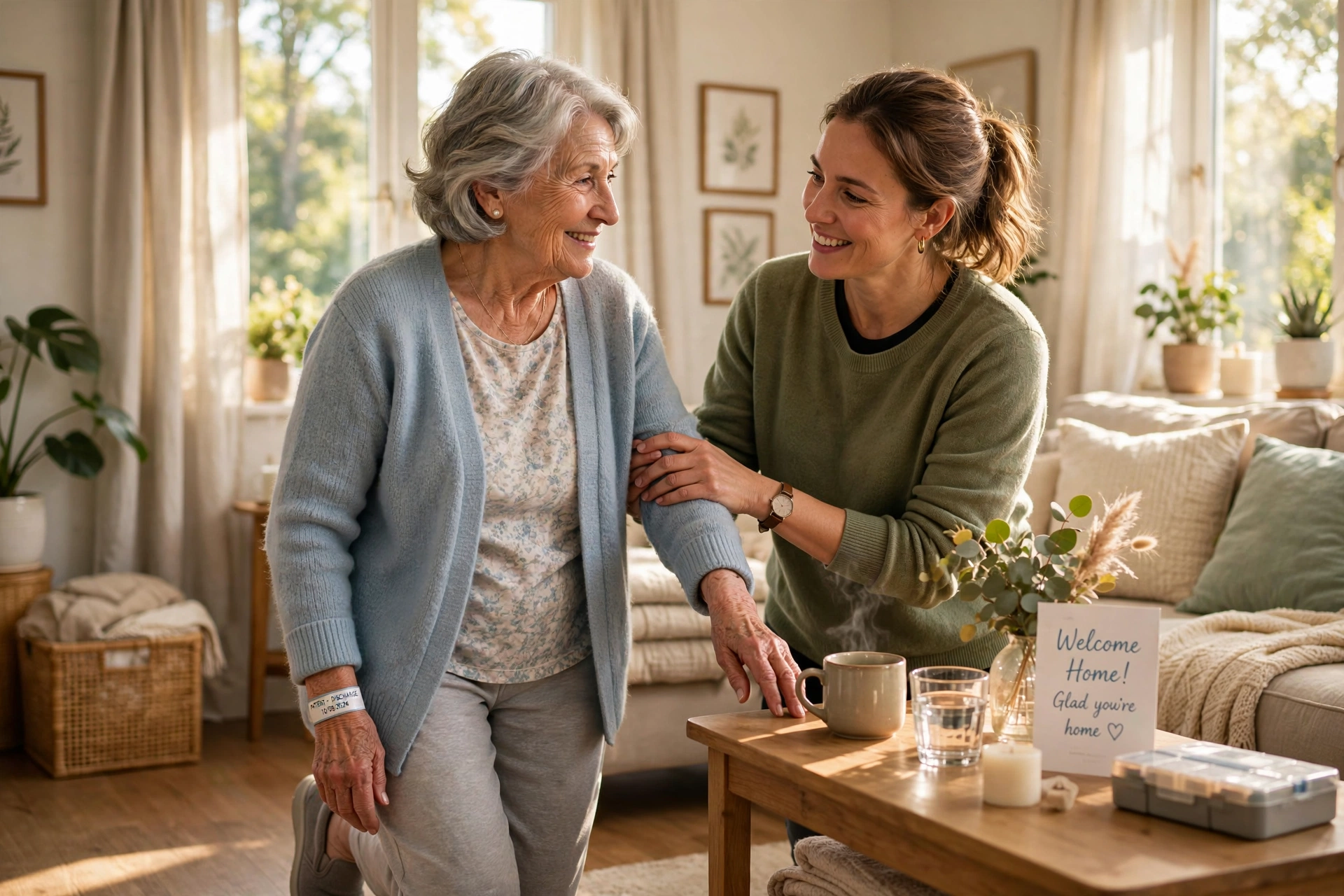
Post-surgery home care for seniors brings a trained caregiver into the home after a hospital stay, covering the everyday tasks recovery depends on: steady help getting around, reminders when medications are due, meal prep, and someone present who notices when something looks off. Most families use it for the first days and weeks after surgery, exactly when recovery is most fragile. Here is what that support looks like, and how to set it up well.
Coming home from the hospital feels like the hard part is over, but for many seniors the toughest stretch is just beginning. New medications come with new timing. Soreness and stiffness make stairs, bathrooms, and getting in and out of bed harder than expected. And plain exhaustion means even simple routines feel like a lot.
A caregiver in those first days does the quiet work that keeps recovery on track:
None of this is dramatic. That is the point. Recovery after surgery is mostly about doing small things consistently, and having another capable adult in the home makes that far more likely.
Nobody plans on a return trip to the hospital, but a few common problems after surgery can snowball fast when a senior is home alone:
The smoothest recoveries start before the car ride home. If the surgery is planned, use the days beforehand to get these five things in place:
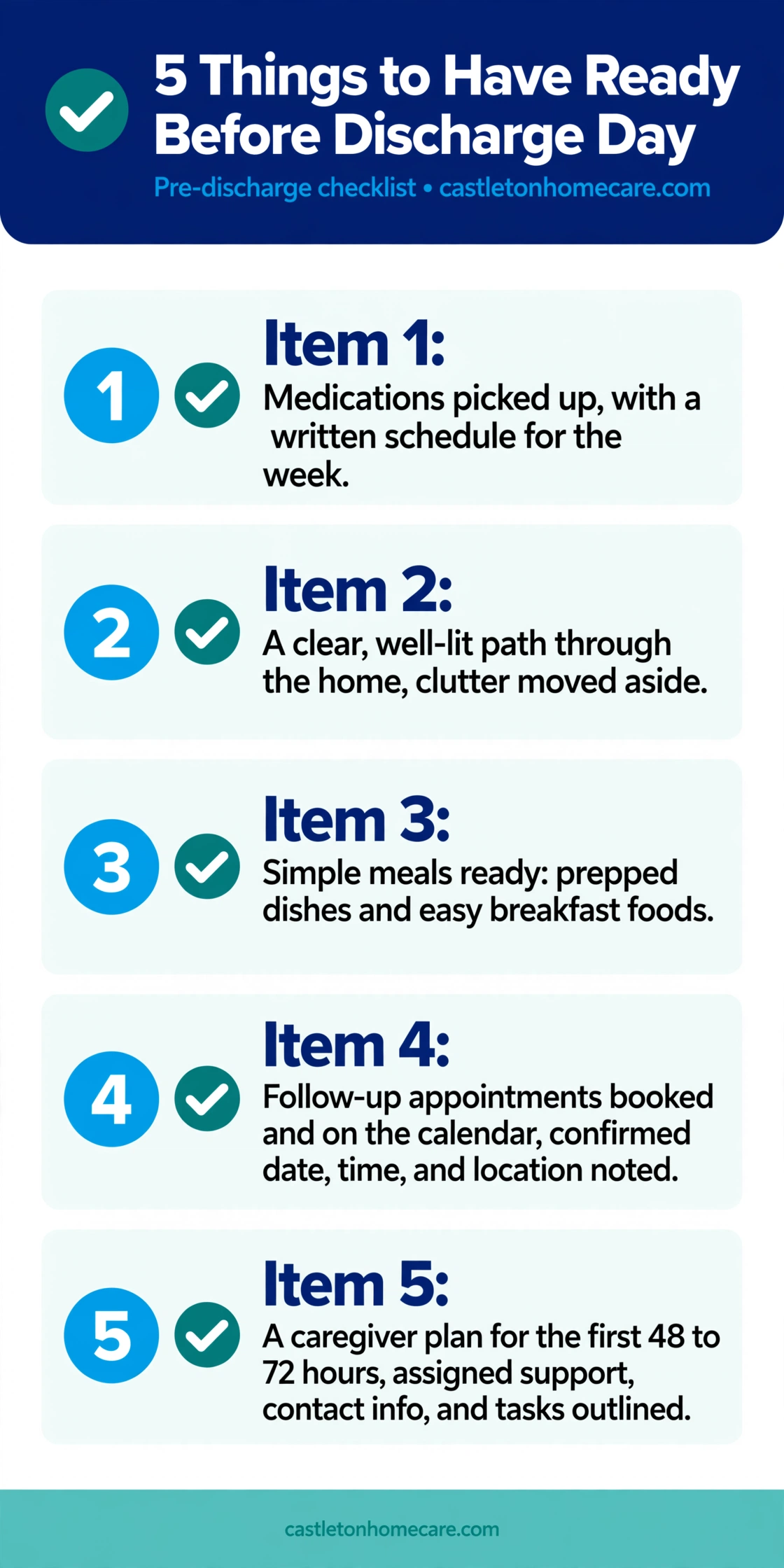
If the surgery is unplanned and discharge comes fast, do not worry about getting all five perfect. A caregiver can help you work through the list on day one.
Yes, starting right away is the best move. Many families arrange for a caregiver to be there the same day their parent comes home from the hospital, or the next morning. Those first days are when help matters most, and starting early means nothing falls through the cracks.
Yes. Meal prep, grocery runs, laundry, and light housekeeping are companionship tasks our caregivers handle every day. After surgery, keeping the household running is just as important as help with bathing and dressing, and the same caregiver covers both.
That is completely normal. Short-term recovery support is one of the most common reasons families call us. Many families start with daily visits for the first week or two, then scale back as strength and confidence return. Recovery support bends to fit the situation.
Your caregiver notices the day-to-day details, appetite, movement, energy, and how the home is holding up, and shares those observations with you. Every care plan is built with RN oversight, so a nurse's guidance backs up the daily help, and you hear from us about how things stand.
Coming home after surgery goes better with the right support in place from day one. That is exactly what post-hospital home care in Alpharetta and surrounding North Metro Atlanta areas is built for: steady, consistent help through the fragile first weeks, with RN oversight on every care plan and 24/7 on-call support for your family.
When we get in touch, we'll take the time to personally understand your unique situation and offer solutions that fit. Reach out through our contact page and tell us about the surgery and the discharge date. We will take it from there.
By John Britt, CNA
Disclaimer: The information in this article is provided for general educational and informational purposes only and is not intended as, and should not be taken as, medical, nursing, legal, financial, tax, or insurance advice. You should consult with qualified professionals—including, but not limited to, a doctor, attorney, financial planner, or tax advisor—for guidance specific to your situation. Castleton Home Care does not guarantee the accuracy, completeness, or timeliness of the information contained in this article and assumes no liability for any actions taken based on its contents.
.avif)
%2520(1).jpeg)
John Britt, CNA, is the owner and administrator of Castleton Home Care, an independent, non‑franchise in‑home senior care agency serving Alpharetta and North Metro Atlanta. Drawing on formal training as a certified nursing assistant and his experience providing direct hands‑on care in private homes and his local community, he now oversees care quality standards, caregiver recruitment and training, and individualized care planning for older adults who want to age in place safely at home.
John has worked closely with seniors, families, home health nurses, and local senior living communities to coordinate post‑hospital care, support chronic condition management at home, and navigate transitions between home care, assisted living, memory care, and skilled nursing facilities. His practical, evidence‑informed approach emphasizes clear communication, realistic expectations, and care plans that protect safety while preserving dignity, independence, and personal preferences.
As a lifelong Metro Atlanta resident, John is deeply familiar with local healthcare and senior care resources in Alpharetta, Johns Creek, Roswell, Milton, Cumming, and surrounding communities. He regularly shares guidance on aging in place, choosing and managing home care, and comparing local senior care options through educational articles, informative videos, caregiver training, and community outreach so families can make informed, confident decisions.
By clicking "Subscribe Now," you agree to receive periodic emails from Castleton Home Care with updates, news, and special offers. Your information will be processed in accordance with our Privacy Policy. You can unsubscribe at any time.
Subscribe to be updated when new educational videos, local expert interviews, and other written tips and guides for family caregivers are released.