When someone you love starts changing, the questions come fast and the answers come slow. The wandering, the repeated questions, the stove left on, the spouse who has not slept through the night in months. Castleton Home Care provides dementia home care across Milton: calm, consistent caregivers who know your loved one's routines, keep the days structured and safe, and give your family room to breathe. Whether the diagnosis is Alzheimer's or another form of dementia, every plan runs under RN oversight, with 24/7 on-call support for your family.
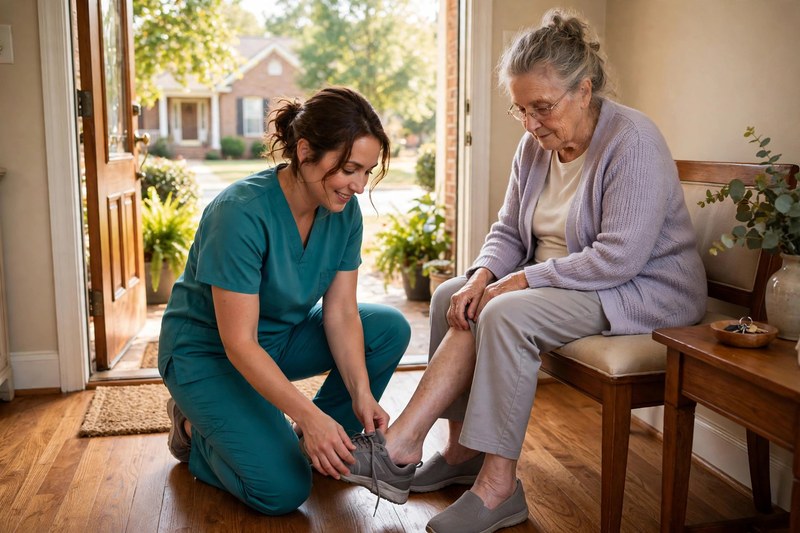
Dementia care at home is built on sameness: the same home, the same routines, the same familiar faces. Here is what our caregivers provide:
Care comes from a small team of familiar W-2 caregivers chosen for patience, skill, and personality fit. Every plan runs under RN oversight, and the plan adjusts as needs change.


In Milton, the call often comes after the first scare. A loved one found down the road, or out by the barn. A stove left on again. A spouse who has not slept through the night in months. On a multi-acre property, a confused walk carries further than it does in a neighborhood, which is why the supervision matters here. Our caregivers step into the routines your loved one already knows, in the Deerhaven Preserve or Bethany Green or Crabapple District home they have lived in for years, and keep the days calm and predictable.
The quiet roads here make for good familiar walking routes, the same loop every morning with someone alongside. Bell Memorial Park gives that walk a steady place to happen, the same route morning after morning so it feels familiar. And when the family needs backup, the Milton Senior Center on Hopewell Road runs weekday programs and lunch for adults 60 and older, Senior Services North Fulton brings Meals on Wheels and medical transportation, and the Alzheimer's Association Georgia Chapter offers support groups and a 24/7 helpline. With about one in ten Milton residents 65 or older, the need is not rare here, and the help is close by.

Every family's day looks a little different, and the schedule is built around your loved one in the assessment. Here is what one 12-hour day can look like, 8 in the morning to 8 in the evening, with the same steady routine each day.
Help getting up, washed and dressed, and settled with breakfast, then a medication reminder and a gentle walk on the same loop at Bell Memorial Park, the same route every morning so it feels familiar.
Lunch prepared and served, the kitchen tidied, and a load of laundry folded and put away.
A shower and fresh clothes, hair brushed, then the bed linens washed and changed and the house tidied.
Dinner served, help getting ready for bed, and everything settled for the night.
Sources: Alzheimer's Association, 2026 Alzheimer's Disease Facts and Figures, 2026.
With patience, not correction. The caregiver meets a repeated question calmly, answers it the same way each time, and gently redirects when frustration builds. Arguing with confusion does not help. A steady, familiar presence does.
The caregiver stays close and redirects him calmly, often with a familiar activity or a walk together instead. We learn his patterns, the times of day he is restless, the doors he tries, and plan around them. On a large Milton property, that matters even more, because a confused walk can carry him further before anyone notices. If wandering becomes a bigger risk, we talk with you about overnight supervision.
Your loved one gets a small, consistent team of familiar faces, not a new stranger each visit. For dementia care especially, familiarity is the whole point, so we keep the team tight and the routines predictable.
Yes. As abilities change, the plan changes with them: more help with daily routines, more supervision, overnight coverage when nights get difficult. Whether the diagnosis is Alzheimer's or another form of dementia, we adjust the schedule and the tasks as life changes, for as long as we are needed.
Yes, and most families wish they had called sooner. You do not need to wait for a crisis. If you are not sleeping, or you spend every day worried about what you will find when you check in, that is enough reason for a conversation. The weekday programs at the Milton Senior Center can give you a few hours of your own back, too, but they are no substitute for steady care at home.