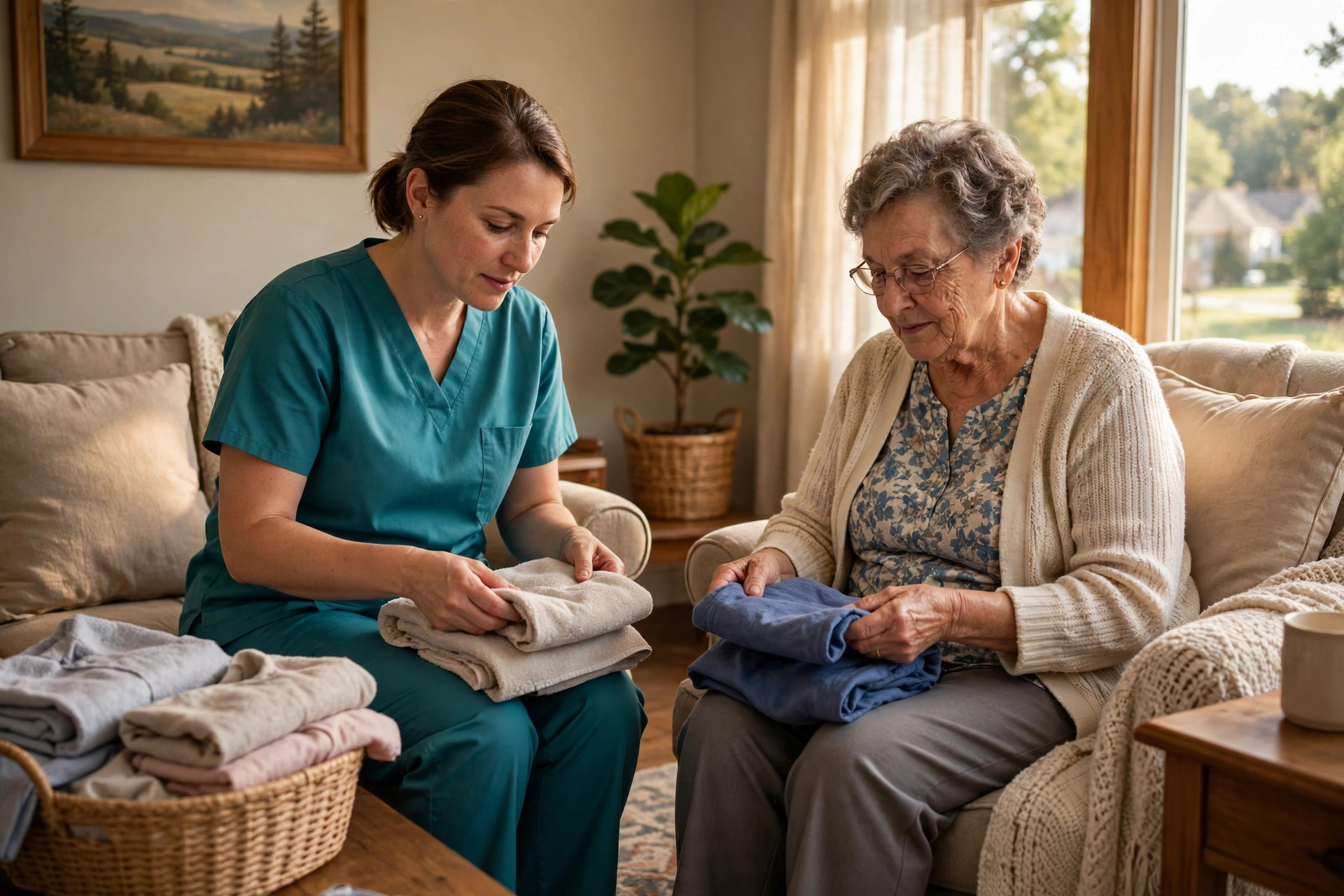
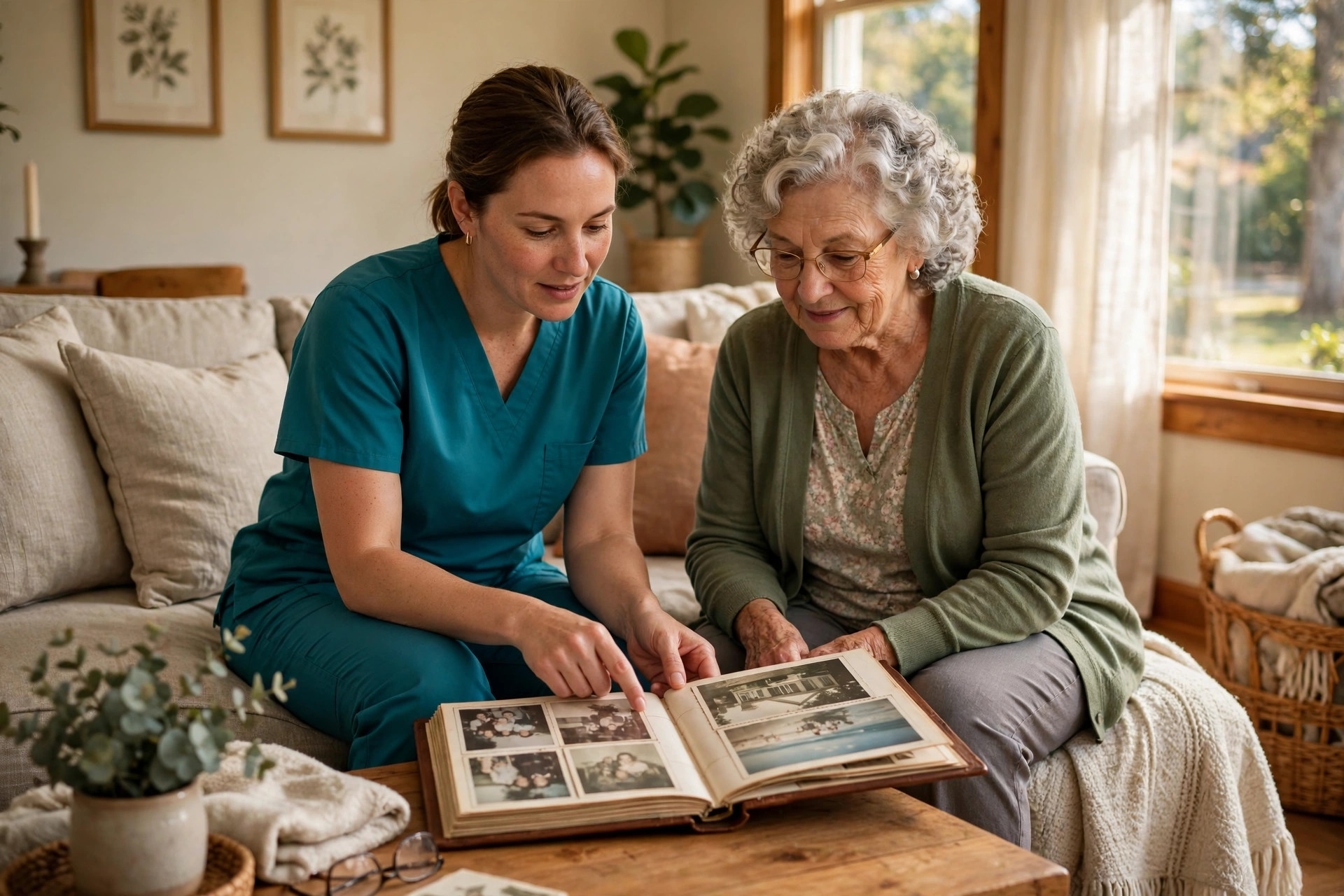
The house is quiet. The kids are grown, the neighbors have moved on, and the days that used to be full of people are now mostly spent alone. Companion care is for the families who see that happening and want to change it before the loneliness becomes the problem. A companion caregiver is a familiar face who comes to the house, prepares and serves a meal, helps with the errands, and gets your loved one out of the house and back into the world they know. It is not medical care. It is company, and it is the help around the house that keeps life feeling normal.

Companion care is company and help around the house, from a caregiver who becomes a familiar face.
Care comes from a primary caregiver chosen for skill, experience, and personality fit, backed by a small, consistent team. Every plan runs under RN oversight, and the plan adjusts as needs change.


Norcross is a city of people who put down roots and stayed. They moved here decades ago, bought in Historic Norcross or Norcross Hills, and never left. Now the kids are grown, the neighbors have moved on, and the house that used to be full is quiet. About one in ten Norcross residents is 65 or older, roughly 1,800 neighbors, and many of them live alone in the same homes they raised their families in. Companion care brings a familiar face through the door, someone who prepares and serves meals, helps with the errands, and gets your loved one out of the house and back into the city they know. The Norcross Senior Center, right in the city on Georgia Belle Court, offers weekday programs and activities for adults 60 and older, and the Gwinnett County Senior Services Center in Lawrenceville helps residents 60 and older with meals, homemaking, transportation, and in-home support. But a program is not a person, and a familiar face at the door is what makes the day feel different.

Every family's day looks a little different, and the schedule is built around your loved one in the assessment. Here is what one day can look like, 9 in the morning to 5 in the evening.
The caregiver arrives, helps your loved one get settled for the day, and serves breakfast with a medication reminder. Then a walk on the flat paths near the pavilions at Lillian Webb Park, with a rest on a bench overlooking the lawn.
Lunch prepared and served, then a rest in a favorite chair while the caregiver tidies the kitchen and starts a load of laundry.
A look through a photo album together, then the bed linens washed and changed and the house tidied.
Dinner prepared and served, the kitchen tidied, and everything settled for the night before the caregiver heads home.
Sources: National Academies of Sciences, Engineering, and Medicine, Social Isolation and Loneliness in Older Adults, 2020; US Census Bureau, QuickFacts: Norcross city, Georgia.
No. Personal care is hands-on help with bathing, dressing, grooming, toileting, and moving around. Companion care is company and help around the house: conversation, meals, light housekeeping, errands, and outings. Many families start with companion care and add personal care later, when the personal tasks start to need a hand. Both run under RN oversight, and the plan adjusts as needs change.
Yes. The caregiver prepares and serves meals, and helps your loved one eat while your loved one enjoys their own food. Meal support is part of companion care, and it is one of the things families value most, because eating alone is one of the loneliest parts of the day.
Yes. The caregiver can drive your loved one to appointments, the store, or the senior center, and stay with them for the trip. A ride to the appointment, a steady arm in the waiting room, and a familiar face for the trip home.
That depends on what your loved one needs. Many families start with three or four visits of several hours each, and the schedule grows from there as needs change. The plan is built around the week your loved one actually lives, and it adjusts as needs change.