There comes a point when a few hours a day is not enough. Maybe it is the 2 a.m. fall nobody heard, or a loved one getting confused and wandering after dark, or the realization that nobody in the house has slept through the night in months because someone is always listening for the other. Castleton Home Care provides 24/7 home care across Sandy Springs: a caregiver in the home around the clock, in rotating shifts, so someone attentive is always there when help is needed. Every plan runs under RN oversight, with 24/7 on-call support for your family.
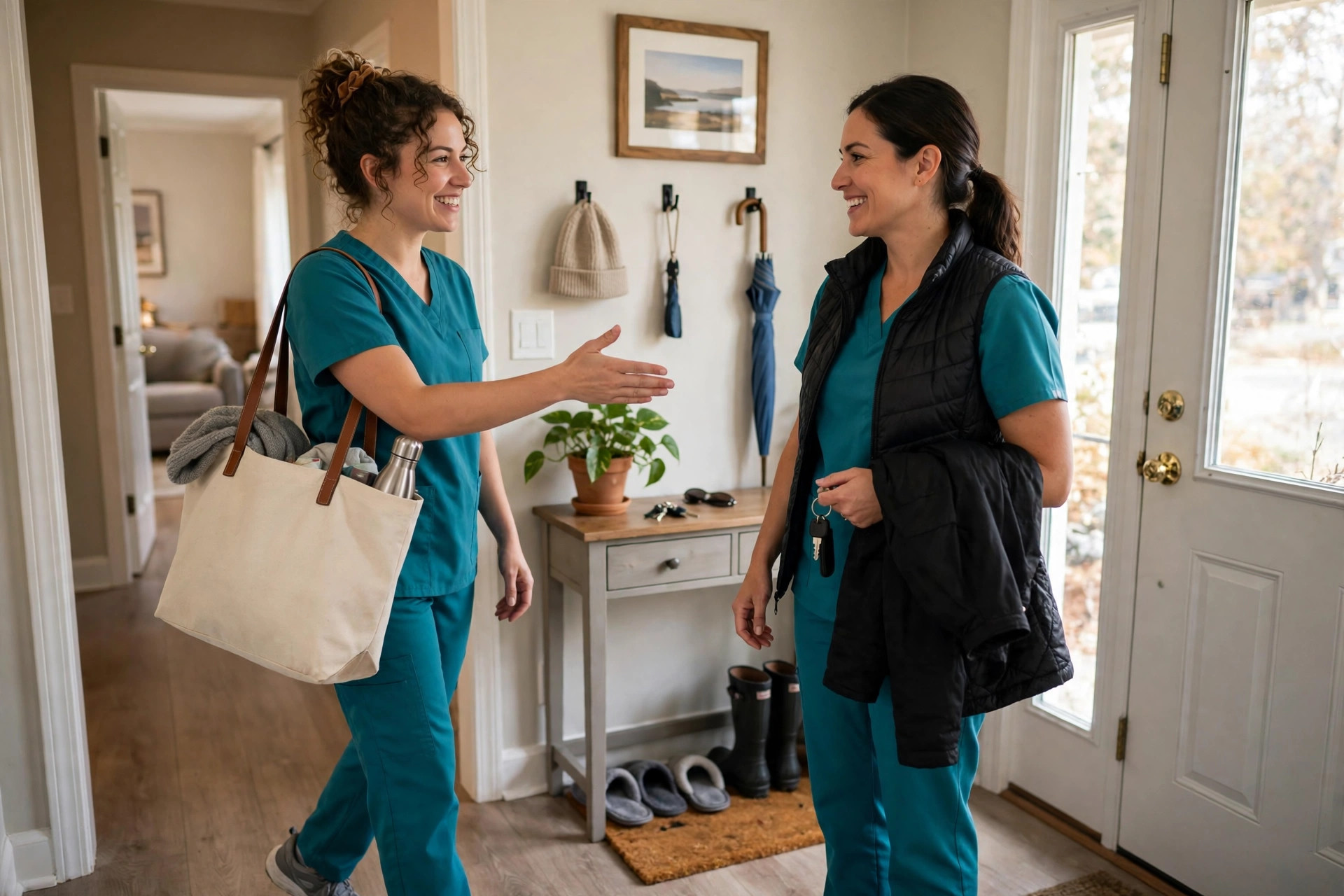
Round-the-clock care covers the full day, not just the difficult hours. Here is what a caregiver provides across every shift:
A 24/7 case runs 168 hours a week, covered by a team of primary caregivers chosen for skill, experience, and personality fit, so familiar faces rotate through the schedule. Every plan runs under RN oversight, and the schedule adjusts as needs change.


In Sandy Springs, the need for round-the-clock care often shows up at night. The neighborhoods here, Riverside, Glenridge, Mount Vernon, Huntcliff, are quiet after dark, and a senior alone in one can be a long way from help even with neighbors close by. A 2 a.m. bathroom trip, a confused walk to the front door, a fall nobody hears. Our caregivers are there through those hours, attentive and ready to help, in the home your loved one knows.
Many Sandy Springs families work demanding jobs, and plenty of adult children live in other cities entirely. Emory Saint Joseph's Hospital on Pill Hill is the natural discharge point when a hospital stay starts the conversation, and the Benson Center's weekday programs give the daytime structure, with a familiar caregiver helping make getting there part of the week. With about one in seven Sandy Springs residents 65 or older, nearly 15,000 neighbors, and eight in ten residents in the same house a year ago, many families are aging in the same homes they chose years ago, and the help is close by.

Every family's day looks a little different, and the schedule is built around your loved one in the assessment. Here is what one day of round-the-clock care can look like, with a caregiver there through the day and through the night.
Help getting up, washed and dressed, and settled with breakfast, then a medication reminder and gentle exercise reminders, with careful assistance getting around the house.
Lunch prepared and served, the kitchen tidied, and a load of laundry folded and put away.
A shower and fresh clothes, hair brushed, then the bed linens washed and changed and the house tidied.
Dinner served, help getting ready for bed, and the overnight caregiver arriving so someone is there through the night.
Sources: Centers for Disease Control and Prevention, Older Adult Falls Data, 2026; Alzheimer's Association, 2026 Alzheimer's Disease Facts and Figures, 2026; AARP and National Alliance for Caregiving, Caregiving in the U.S. 2020, 2020; Genworth, November 2021 study.
No, and the difference shows at 3 a.m. With 24/7 care, a caregiver is there through the night, attentive and ready to help as needed, working 8- or 12-hour shifts from a small, consistent team. With live-in care, the caregiver must be guaranteed undisturbed hours of sleep. Our overnight hours are covered by someone who is there for them.
The signs usually show up at night first: a fall getting out of bed, wandering after dark, or a family member who has not slept properly in weeks because they are always listening. On a quiet Sandy Springs street, a fall in the middle of the night can go unheard for hours. When a few hours a day no longer covers the gaps, or the gaps have moved into the night, it is time for a conversation. We are glad to talk through what you are seeing.
Your loved one gets a small, consistent team of familiar faces, not a new stranger each shift. The team is chosen for skill, experience, and personality fit, with trained backups for sick days, and every shift starts with a structured handoff so nothing gets lost between caregivers.
Yes. Some Sandy Springs families use round-the-clock care for the first weeks after a hospital stay, often after a discharge from Emory Saint Joseph's Hospital, then step down to fewer hours as recovery progresses. Others need it ongoing. The schedule follows the need, not a fixed package, and we adjust as life changes.
Stays close and stays ready. Bathroom trips, repositioning, a reminder when medications are due, a glass of water, and being there the moment something feels wrong. For many families, the overnight shift is the whole reason: the house is quiet, everyone else is asleep, and someone capable is watching over it.