
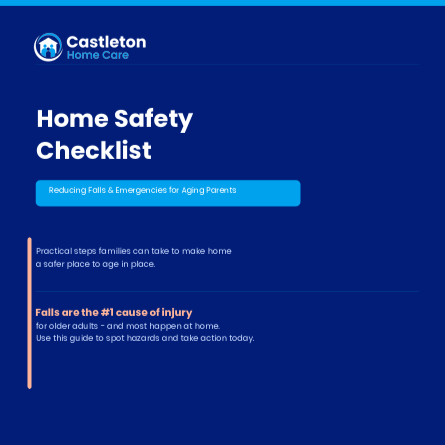
A practical home safety checklist that helps families spot hidden fall hazards, have a respectful safety conversation, and make simple changes so aging parents can stay safer and more independent at home.
Home Safety Checklist to Reduce Falls and Emergencies for Aging Parents is a step‑by‑step guide for families who want to help an aging parent “age in place” safely at home without waiting for a serious fall or emergency to be the wake‑up call. It shows you how to talk about safety in a way that protects dignity, then walks room‑by‑room through the home so you can fix the riskiest spots first.
The guide starts with the conversation, because how you bring up safety matters as much as which grab bar you buy. You’ll learn how to lead with concern instead of criticism, ask where your parent feels unsteady or worried, start with small, easy wins like better lighting and securing throw rugs, and bring in professionals such as a primary care provider, physical or occupational therapist, or a reputable home care agency when extra support is needed.
Inside, you’ll find a clear overview of the highest‑risk areas and a detailed checklist you can print and use as you walk through the home:
High‑risk areas to focus on
Room‑by‑room safety checklist
You’ll also get quick pointers on where to find fall‑prevention products and support—from local hardware and medical supply stores to community programs, therapy evaluations, and in‑home caregivers who can provide supervision, personal care, and companionship. Used together, the conversation tips and checklist help you reduce falls, avoid preventable emergencies, and support your parent’s independence at home in a way that feels collaborative rather than controlling.

John Britt, CNA, is the owner and administrator of Castleton Home Care, an independent, non‑franchise in‑home senior care agency serving Alpharetta and North Metro Atlanta. Drawing on formal training as a certified nursing assistant and his experience providing direct hands‑on care in private homes and his local community, he now oversees care quality standards, caregiver recruitment and training, and individualized care planning for older adults who want to age in place safely at home.
John has worked closely with seniors, families, home health nurses, and local senior living communities to coordinate post‑hospital care, support chronic condition management at home, and navigate transitions between home care, assisted living, memory care, and skilled nursing facilities. His practical, evidence‑informed approach emphasizes clear communication, realistic expectations, and care plans that protect safety while preserving dignity, independence, and personal preferences.
As a lifelong Metro Atlanta resident, John is deeply familiar with local healthcare and senior care resources in Alpharetta, Johns Creek, Roswell, Milton, Cumming, and surrounding communities. He regularly shares guidance on aging in place, choosing and managing home care, and comparing local senior care options through educational articles, informative videos, caregiver training, and community outreach so families can make informed, confident decisions.