
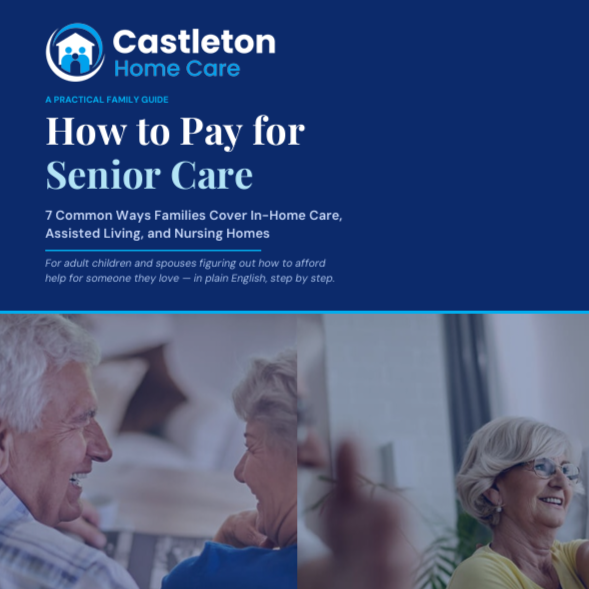
Guide that walks adult children and spouses through seven common ways families pay for senior care—including in‑home care, assisted living, and nursing homes—so you can understand your options beyond “just pay out of pocket.”
How to Pay for Senior Care: 7 Practical Ways to Afford Home Care, Assisted Living, and Nursing Homes is a practical guide for families who have just seen the real cost of senior care and are asking, “How do people afford this?” It explains, in simple language, the main ways families pay for home care, assisted living, memory care, and nursing homes, and how these options are often combined into a realistic plan.
The guide is written for adult children trying to keep parents safely at home, spouses caring for a partner whose needs are increasing, and families comparing quotes from home care agencies, assisted living communities, or nursing homes. It emphasizes that most people do not have a single magic solution; instead, they use a mix of income, savings, government programs, insurance, and home equity to cover costs over time.
Inside, you’ll find clear explanations of seven major payment options:
The guide also includes a simple overview of typical senior care costs by setting, a “who usually pays” table for different types of care, and a step‑by‑step framework to build a personalized payment plan. By the end, families will know how to match their loved one’s care needs with likely payment sources, what questions to ask professionals, and how to create a plan that can adapt as needs and finances change over time.

John Britt, CNA, is the owner and administrator of Castleton Home Care, an independent, non‑franchise in‑home senior care agency serving Alpharetta and North Metro Atlanta. Drawing on formal training as a certified nursing assistant and his experience providing direct hands‑on care in private homes and his local community, he now oversees care quality standards, caregiver recruitment and training, and individualized care planning for older adults who want to age in place safely at home.
John has worked closely with seniors, families, home health nurses, and local senior living communities to coordinate post‑hospital care, support chronic condition management at home, and navigate transitions between home care, assisted living, memory care, and skilled nursing facilities. His practical, evidence‑informed approach emphasizes clear communication, realistic expectations, and care plans that protect safety while preserving dignity, independence, and personal preferences.
As a lifelong Metro Atlanta resident, John is deeply familiar with local healthcare and senior care resources in Alpharetta, Johns Creek, Roswell, Milton, Cumming, and surrounding communities. He regularly shares guidance on aging in place, choosing and managing home care, and comparing local senior care options through educational articles, informative videos, caregiver training, and community outreach so families can make informed, confident decisions.