
.jpg)
A Complete Guide: Causes, Sources, Removal, and Prevention
Executive Summary
"Old person smell" is a real, scientifically documented phenomenon — not simply a result of poor hygiene. It stems from a specific chemical compound called 2-nonenal that builds up on skin and transfers to every fabric and surface in the home. Eliminating it requires a multi-layered approach: understanding the chemistry, identifying where it accumulates, deep-cleaning those surfaces systematically, and maintaining ongoing habits to prevent re-buildup. This guide covers all four phases.
Part 1: What Causes "Old Person Smell"?
The Science: 2-Nonenal
The primary culprit behind the characteristic musty, greasy, or faintly grassy odor associated with older adults is a chemical compound called 2-nonenal (also written as 2-nonenol). It forms when omega-7 fatty acids naturally present on the surface of aging skin undergo lipid peroxidation — an oxidation process that accelerates with age.
As people get older, their skin's antioxidant defenses weaken, sebaceous gland activity changes, and hormonal shifts occur — all of which promote greater fatty acid oxidation on the skin's surface. The result is a steady increase in 2-nonenal production that is distinct from typical sweat-based body odor. Importantly, 2-nonenal has a low odor threshold, meaning even small amounts are detectable, and its oily, lipid-soluble nature means it clings to skin and fabrics in ways that ordinary soap and water may not fully address.
Why It's Not Just a Hygiene Issue
This is a critical distinction: 2-nonenal production is driven by internal biological processes, not primarily by bathing habits. Factors that accelerate oxidative stress — including poor diet, inactivity, poor sleep, smoking, high alcohol intake, insulin resistance, and environmental toxin exposure — can all increase the rate of lipid oxidation and therefore 2-nonenal production. In other words, lifestyle and metabolic health directly influence how much of this compound an individual produces.
Part 2: Where Does the Smell Accumulate?
Because 2-nonenal is an oily, lipid-soluble compound, it transfers easily from skin to any surface it contacts and embeds deeply rather than sitting on top. Understanding where it concentrates helps prioritize the cleaning effort.
.png)
A Note on Drains
Bathroom sink drains are a secondary but real odor source, particularly in bathrooms frequented by older adults. Skin cells, oils, and biological residue can accumulate in drain traps and contribute to a musty background smell throughout the space.
Part 3: How to Remove the Smell — Deep Cleaning
Removing embedded 2-nonenal requires targeting its lipid-based chemistry. Standard cleaning alone often won't cut it — you need enzymatic cleaners, degreasers, and odor-neutralizing agents that actually break down the compound rather than mask it.
Step 1: Start with Ventilation
Before any cleaning, open all windows and exterior doors to create cross-ventilation. Use box fans to push stale air out and pull fresh air in. Even 15–30 minutes of strong airflow before cleaning makes a measurable difference. This also prevents you from cleaning compounds back into a stagnant air environment.
Step 2: Bedding, Pillows & Mattresses
This is the single highest-impact area to address.
- Sheets and pillowcases: Wash weekly in hot water with an enzyme-based or heavy-duty detergent. Add 1/2 cup of white vinegar to the rinse cycle to neutralize trapped odors — vinegar breaks down fatty acid residues.
- Pillows: Launder according to care label, or replace if heavily saturated. Add baking soda or borax to the wash cycle.
- Mattress: Sprinkle a generous layer of baking soda across the entire surface and let it sit for several hours (overnight if possible) before vacuuming thoroughly with a HEPA-filter vacuum. Follow with an enzyme-based spray designed for body oils; let it dry completely before covering.
- Mattress protectors: Wash on a regular schedule; waterproof protectors prevent oils from reaching the mattress in the first place.
- Pillows and mattress air-out: Each morning, pull back all covers and let the bed air out for at least an hour before making it.
Step 3: Upholstered Furniture
- Vacuum all surfaces, cushions, and crevices with a HEPA-filter vacuum weekly.
- Sprinkle baking soda liberally over all upholstered surfaces, let it sit for a minimum of 15 minutes (up to several hours), then vacuum thoroughly.
- Apply an enzyme-based fabric spray — these products actually digest the organic compounds causing the odor rather than masking them. Products like OdoBan, Nature's Miracle, or comparable enzyme cleaners work well.
- For deep-set odors, arrange a professional steam cleaning of upholstered furniture annually, or more frequently if needed.
- Wash cushion covers, armrest covers, and throw blankets regularly.
Step 4: Clothing & Closets
- Wash all clothing that has been worn without washing, including items that have been sitting in closets for months — even items that look "clean" can harbor embedded 2-nonenal.
- Use an enzyme-based or oxygen-boosting laundry additive (such as OxiClean or a laundry booster with enzyme blend) in addition to standard detergent.
- Add 1/2 cup of white vinegar to the rinse cycle to neutralize fatty acid odors.
- Use borax as a laundry booster — it's particularly effective on biological odors.
- Do not over-dry in a hot dryer: high heat can bake in odors if the compound hasn't been fully removed. Air-dry when possible, especially outdoors in sunlight — UV rays naturally break down odor-causing bacteria and compounds.
- For severely affected items that don't respond to repeated washing, consider replacement.
- Clear out the closet itself: wipe down walls and shelves with a diluted vinegar-water solution (50/50 ratio), allow to fully dry, and place open boxes of baking soda or activated charcoal packets inside.
Step 5: Carpets & Rugs
- Vacuum thoroughly with a HEPA-filter vacuum, making multiple overlapping passes.
- Apply baking soda liberally across the entire carpet, working it into the fibers. Let sit for at least 30 minutes to several hours, then vacuum.
- Spray any high-contact areas (spots where a person regularly sits or rests their feet) with an enzyme-based cleaner, following product dwell time instructions.
- Schedule professional carpet cleaning at least annually — steam extraction removes deeply embedded compounds that home methods cannot reach.
- If the carpet has years of embedded odor and does not respond to cleaning, replacement may be the only effective solution. This is especially true for older carpet and padding that has absorbed years of compounds.
Step 6: Curtains, Drapes & Window Coverings
- Wash machine-washable curtains with enzyme detergent and white vinegar in the rinse cycle.
- Dry-clean or send out professionally for curtains that cannot be machine-washed.
- Wipe down blinds with a diluted all-purpose cleaner or diluted white vinegar solution.
- Replace curtains if they are very old and the odor cannot be laundered out — fabric window treatments are major odor reservoirs that are often overlooked.
Step 7: Walls, Ceilings & Painted Surfaces
Aerosolized 2-nonenal settles on walls and ceilings over time, especially in bedrooms, bathrooms, and sitting areas with low ventilation.
- Wash all walls with a diluted all-purpose cleaner or a 50/50 white vinegar and water solution using a mop or large sponge. Work top-to-bottom (ceiling first, then walls, then baseboards).
- For eggshell or satin finishes, this is relatively straightforward. For flat/matte paint, be gentle to avoid removing paint.
- For persistent, deeply absorbed odors in walls — particularly in a room that has housed an elderly person for many years — apply an odor-blocking primer before repainting. Products like KILZ Original, KILZ Max, or Zinsser BIN shellac-based primer are specifically designed to seal surface odors. These create a physical barrier so that odor-emitting compounds in the wall surface cannot continue to off-gas into the room.
- Follow with a fresh coat of paint; low-VOC paint is preferred in occupied spaces.
Step 8: HVAC System & Air Filters
The HVAC system is the circulation engine of the home — if it is dirty, it will redistribute odors throughout every room continuously.
- Replace the HVAC air filter immediately, and upgrade to a higher-MERV-rated filter (MERV 11–13 is ideal for odor particles without restricting airflow).
- Remove all vent registers and wash them in soapy water, scrubbing off any accumulated dust and oily residue.
- Vacuum inside duct openings as far as the hose can reach.
- Consider a professional duct cleaning if the system has not been serviced in many years — ducts can harbor significant odor-laden deposits.
- Run the HVAC fan continuously (not just when heating/cooling) for several days after deep cleaning to help flush the home's air.
Step 9: Air Purification
- Deploy air purifiers with both a True HEPA filter and an activated carbon filter in primary rooms. HEPA alone does not remove VOCs or odor compounds — activated carbon is required to adsorb gaseous compounds like 2-nonenal.
- Larger activated carbon load = more effective odor removal. Recommended units with strong carbon filtration include the Austin Air HealthMate and IQAir HealthPro Plus.
- Place purifiers in the bedroom and main living/sitting areas where odor concentration is highest.
Step 10: Odor Absorbers for Residual Odor
After deep cleaning, deploy passive odor absorbers to capture residual airborne compounds:
- Activated charcoal packets in closets, under beds, and in corners of rooms — far more porous and effective than baking soda for long-term absorption. Recharge by placing in sunlight for several hours every month or two.
- Open boxes of baking soda in smaller enclosed spaces like bathroom shelves, dresser drawers, and cabinets.
- Bowls of white vinegar left out overnight in smelly rooms — the acid neutralizes airborne odor molecules.
- Coffee grounds placed in shallow bowls in closets or musty corners.
Step 11: Drains
Pour 1/2 cup baking soda followed by 1 cup white vinegar down every bathroom drain. Let fizz for 10 minutes, then rinse with hot water. Do this monthly as part of the regular maintenance routine.
Part 4: Ongoing Maintenance — Preventing the Smell from Returning
Once the deep clean is complete, the key to keeping the home fresh long-term is a consistent, layered maintenance routine. 2-nonenal will continue to be produced and transferred to surfaces — the goal is preventing re-accumulation.
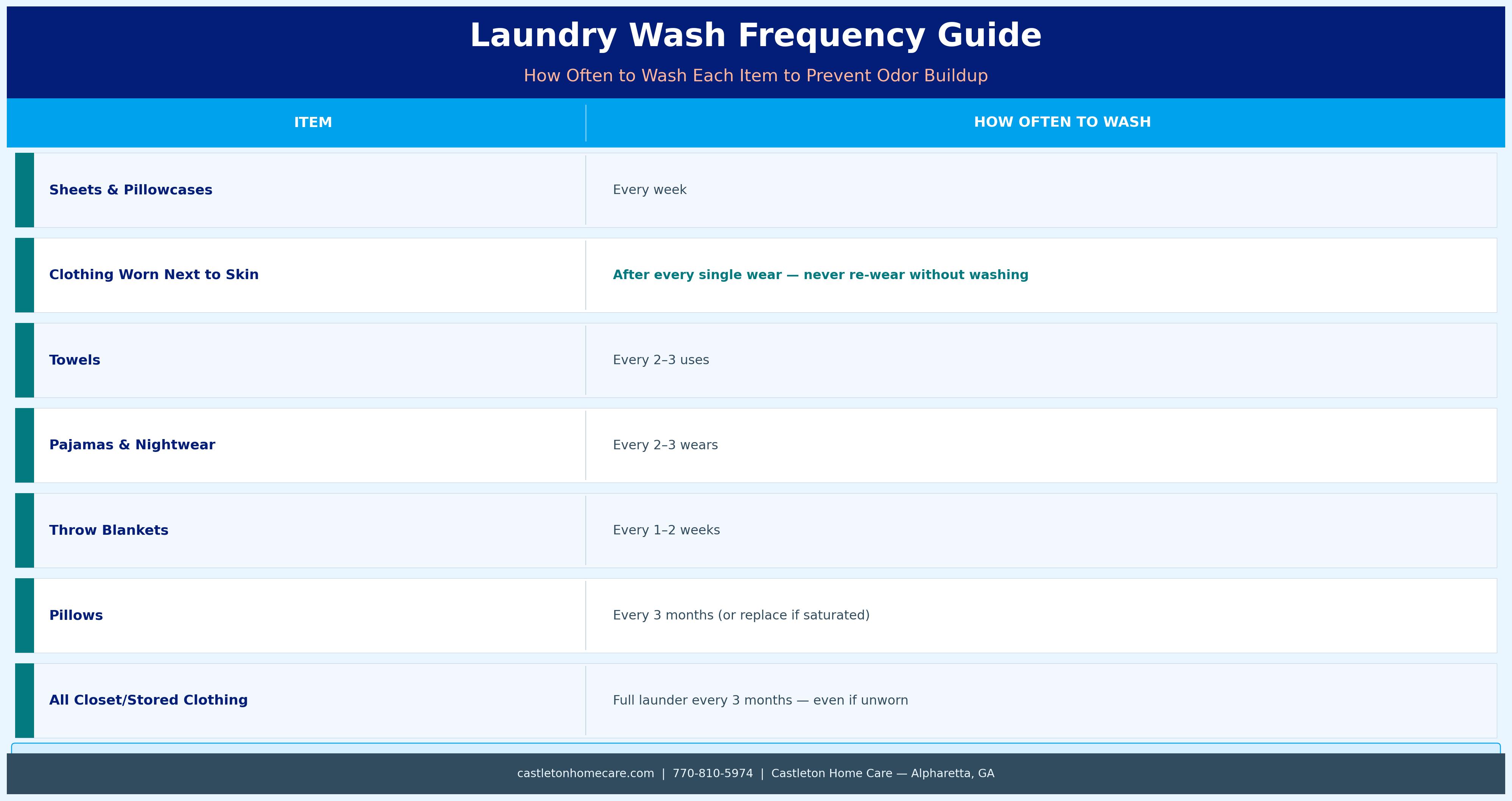
Always add white vinegar to the rinse cycle for linens and clothing. Enzyme-based detergents outperform standard detergents on fatty acid odors.
Ventilation as a Daily Habit
- Open windows for at least 15–20 minutes daily when weather permits to flush stale air.
- Pull back bed covers every morning and let the bed air out for 1 hour before making it.
- Use ceiling fans and bathroom exhaust fans consistently to maintain air movement.
- Maintain indoor humidity between 40–55% — excessive humidity promotes musty smells and mold growth alongside 2-nonenal.
Regular Vacuuming & Surface Maintenance
- Vacuum all floors, upholstered furniture, and soft surfaces weekly using a sealed HEPA-filter vacuum.
- Wipe down high-contact hard surfaces (armrests, door handles, light switches) with a diluted all-purpose or vinegar solution weekly.
- Clean bathroom sinks, drains, and toilets weekly — bacteria in these areas compound overall odor.
- Wipe down walls in the bedroom and primary sitting room monthly with a diluted vinegar-water solution.
HVAC & Air Filter Maintenance
- Replace HVAC filters every 60–90 days (more frequently with heavy use).
- Run air purifiers continuously in primary rooms; replace activated carbon filters on schedule (typically every 6–12 months depending on the unit).
- Keep activated charcoal packets refreshed and recharged monthly.
Fabric & Furniture Choices
- Avoid synthetic fabrics (polyester, nylon, acrylic) for any items in close contact with skin — synthetics absorb and trap 2-nonenal far more stubbornly than natural fibers and are much harder to fully deodorize even after washing.
- Opt for cotton, linen, bamboo, or wool for clothing, bedding, and upholstery — these natural fibers release odor compounds more readily in the wash.
- Use washable slipcovers on upholstered furniture that receives heavy daily use — they create a washable barrier between skin and the furniture itself.
- Keep a waterproof mattress protector on all mattresses at all times.
Diet & Lifestyle Factors (Addressing the Source)
Because 2-nonenal is produced internally through oxidative stress, lifestyle habits play a real role in reducing how much of the compound is generated in the first place:
- Antioxidant-rich diet: Foods high in antioxidants and polyphenols — colorful vegetables, leafy greens, berries, green tea, pomegranate, fatty fish (omega-3s), sulfur-rich foods like broccoli and garlic — may help reduce lipid oxidation rates.
- Mushrooms: Shiitake and oyster mushrooms are particularly high in ergothioneine (a potent antioxidant) and spermidine, both of which may slow the lipid oxidation process that produces 2-nonenal.
- Limit oxidation accelerators: Processed foods, excess sugar, fried foods, alcohol, and smoking all increase oxidative stress and may accelerate 2-nonenal production.
- Regular exercise, quality sleep, hydration, and stress reduction all support lower oxidative stress levels and therefore lower 2-nonenal output over time.
Specialized Skincare Products
- Persimmon-based soaps and body washes: A traditional Japanese approach, the tannins in persimmon extract are believed to bind to and break down 2-nonenal molecules on the skin — more effectively than standard soap. Mirai Clinical and similar brands produce body washes specifically formulated for 2-nonenal.
- Japanese green tea-based products: Antioxidants in green tea extract help detoxify the skin and may extend deodorizing effects.
- Regular exfoliation: Dead skin cells that accumulate on the skin surface are a primary site of 2-nonenal buildup. Gentle exfoliation 1–2 times per week removes these cells and helps slow compound buildup on the skin.
- pH-balanced, enzyme-based body washes: Look for washes with antibacterial or antioxidant ingredients that address both the compound and the bacteria that contribute secondary odor.
Disclaimer: This article is for general informational purposes only and does not constitute legal, financial, tax, insurance, or medical advice. You should consult with qualified professionals—such as an attorney, financial planner, tax advisor, reverse mortgage counselor, healthcare provider, or Veterans Service Officer—before making decisions about how to pay for care or choosing specific care arrangements.
Sources
- VeryWell Health — 'Old People Smell' Is Real—Here's Why It Happens (March 2026) — verywellhealth.com
- Vice Magazine — 'Old People Smell' Is Real. Here's How to Get Rid of It (Sept 2025) — vice.com
- Yahoo Health / Longevity Experts — How to get rid of old people smell (May 2026) — health.yahoo.com
- Healthline — Do Older People Actually Smell Different? (Oct 2018) — healthline.com
- Caring Senior Service — How to Minimize 'Old Person Smell' (March 2026) — caringseniorservice.com
- Facebook / Berkeley County Growth Group — Community discussion on removing elderly bedroom smell (March 2025)
- Dirty Labs / Dr. Pete — What Is "Old-Person Smell"? The Science Behind Aging Body Odor (March 2026) — dirtylabs.com
- Facebook Community Group — Preventing old person smell in homes with simple tips (June 2024)
- Realtor dot com — How to Get Rid of Smells in a House From Previous Owners (Jan 2025) — realtor.com
- UCLA Health — Dusty smells triggered by 2-nonenol compound (May 2025) — uclahealth.org
- AgingCare — Why Do Old People Smell Differently? — agingcare.com
- AgingCare — Community Q&A: Making old folks smell better before guests arrive (Dec 2015) — agingcare.com
- Mirai Clinical — How To Get Rid Of Old People Smell In House (Sept 2025) — miraiclinical.com
- HomeLight — Tired of Old House Smell? Here's How to Send the Stench Packing (March 2025) — homelight.com
- Magnolia Terrace — How to Prevent Nonenal Odor: Tips for Loved Ones (Oct 2025) — magnoliaterracegalion.com
- Always Best Care — What Causes "Old People Smell" and How Can You Manage It? (Dec 2025) — alwaysbestcare.com
- Reddit r/CleaningTips — Removing 'Old People' (2-Nonenal maybe) smell from new (to me) house (July 2024)
- COIT — How to Deodorize a Room (and Your Whole House) (March 2025) — coit.com
- Reddit r/laundry — Best gentle detergent to get in-set elderly odors (Oct 2024)
- PubMed — Activated charcoal and baking soda to reduce odor — pubmed.ncbi.nlm.nih.gov
- Rabbit Air — What Absorbs Bad Smells? A Guide To Odor Absorption (Sept 2022) — rabbitair.com
- Westmont Living — Remove Nonenal Odor From Clothes (April 2026) — westmontliving.com
- Branch Basics — 7 Natural Odor Eliminators That Really Work (Nov 2025) — branchbasics.com
- AgingCare Q&A — How do you get the old people smell out of your laundry and home? (Sept 2020) — agingcare.com
- Reddit r/HomeImprovement — Kilz for old house smell? (Jan 2022)
- KILZ — Odor Blocking Primers for Fresh as Spring Painting Projects (March 2021) — kilz.com
- Houzz Forum — Old smoke smell in new house — Kilz? (July 2017)
- Oransi — Do Air Purifiers Remove VOCs? (Feb 2026) — oransi.com
- IQAir — Do air purifiers remove VOCs? (Jan 2026) — iqair.com
- HouseFresh — The best air purifiers for VOCs, odors and gases — housefresh.com
- Reddit r/AirPurifiers — Best purifier for VOCs and formaldehyde (Feb 2024)
- Branch Basics — The Best Human-Safe Deep Cleaning Checklist For Your Home (April 2025) — branchbasics.com
- Molekule — The most natural tools to remove smells in the home (Jan 2026) — molekule.com
.jpg)
.jpg)
%20(1).jpg)
.jpg)