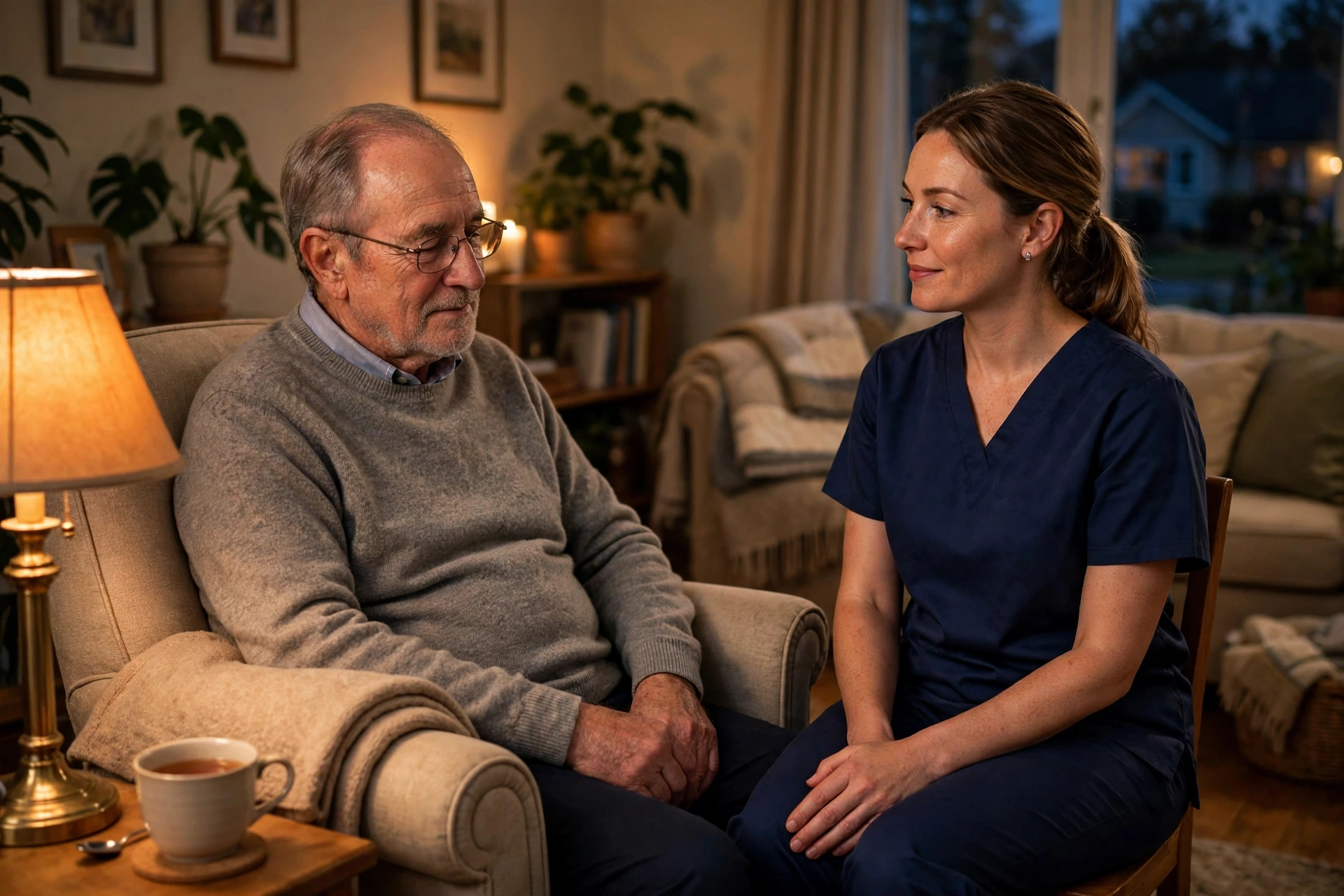

It usually starts with the house, not with loneliness. The fridge holds the same few items. The laundry waits longer than it used to. Dinner has quietly become cereal, or a sandwich standing at the counter. Your parent is still independent, still themselves, but the daily work of running a home is getting heavier, and the days are getting quieter.
That is the exact situation companion care is built for. A companion caregiver comes on a steady schedule and takes care of the housework of daily life: real meals cooked and shared, laundry done and put away, errands run, rides to appointments, the kitchen left cleaner than it was found. And woven through all of it is the part families underestimate until they see it: another person in the house, someone to talk to, someone who notices how the day is going. This guide explains what companion care in Dunwoody actually covers, who it fits best, and how families start it. You can also read about companion care from Castleton Home Care.
What Companion Care Actually Covers
Companion care is practical help plus real company, on a routine schedule. Here is what a visit typically includes.
Around the house
This is where most visits start. The caregiver preps meals, and cooks with your parent rather than just for them when they enjoy it. Laundry gets washed, dried, folded, and put away. Light housekeeping keeps the kitchen, bathrooms, and living areas tidy. Groceries get bought and put away, prescriptions picked up, the small errands that used to take half a Saturday handled in an afternoon. None of this is professional cleaning: it is the normal upkeep of a lived-in home, done steadily so nothing piles up.
Getting out and about
Many Dunwoody seniors stop driving before they stop wanting to go places, and that is where isolation quietly begins. A companion caregiver provides rides: to doctor appointments, to the pharmacy, to the hair salon, to lunch with a friend. They also make outings happen that would not happen alone, a walk at Brook Run Park, a trip to the Dunwoody farmers market, an afternoon at the senior center. The ride is the practical part. The outing is the point.
Company at the table
Then there is the part no task list captures. A shared cup of coffee in the morning. A real lunch eaten together at the table instead of alone at the counter. Conversation about the news, the grandkids, the Braves. A reason to get dressed, a reason the day has shape. Families tell us this is the change they notice first: their parent eats better, sleeps better, and sounds like themselves on the phone again, because the days have company in them.

Companion Care vs. Personal Care
The distinction matters, because the two services do different jobs.
Companion care covers the household and the social side: meals, laundry, light housekeeping, errands, transportation, and company. It does not include hands-on help with the body: no assistance with bathing, dressing, toileting, or transferring, and no help with walking or mobility. One useful rule of thumb: cooking the meal is companion care; helping a parent eat it is personal care.
Many families start with companion care and add personal care later as needs change, or use both from the beginning on different visits. The in-home assessment sorts out which mix fits, and the plan adjusts over time. Starting with the right service matters less than starting with an honest picture of the day.
Who Companion Care Fits Best
Companion care fits the parent who is mostly independent but not thriving alone. The signs are practical, not dramatic: the house is slipping, meals have gotten simpler, outings have gotten rarer, the calendar is emptier than it used to be. They do not need hands-on personal care yet, but the days would go better with help and company in them.
It also fits the adult child who is carrying the household work from a distance or after hours. If your weekends have become grocery runs, laundry, and checking the fridge, companion care gives you your weekends back and gives your parent better weekdays. Most of the families we serve use companion care as part of a substantial, ongoing weekly routine, often several visits a week, because a routine is what keeps a house running and a week feeling full.
The Quiet Health Case for Company
The company part of companion care is not just nice to have. The research on isolation in older adults is sobering: a CDC summary of a 2020 National Academies report found that more than one-third of adults 45 and older feel lonely, and nearly one-fourth of adults 65 and older are socially isolated. The same summary reports that social isolation was associated with about a 50% higher risk of dementia, while poor social relationships were associated with a 29% higher risk of heart disease and a 32% higher risk of stroke. The National Institute on Aging adds that isolation and loneliness are linked with higher risk of high blood pressure, obesity, and weakened immune function.
Read positively, that research points the same direction: regular contact, shared meals, outings, and a week with shape in it are protective. A companion caregiver cannot replace family, and does not try to. But a familiar person in the house several days a week, cooking lunch and talking through the afternoon, is one of the most practical answers to isolation there is.
Living in Dunwoody: Local Resources Worth Knowing
Home care doesn't happen in a vacuum. The hospitals, senior programs, and neighborhoods around you shape what care looks like in practice.
- North DeKalb Senior Center (3393 Malone Dr, Chamblee, 404-298-4461) is the DeKalb County senior center closest to Dunwoody, with weekday programming, meals, fitness classes, and activities. It is a short drive from most Dunwoody neighborhoods and a favorite outing destination for our companion caregivers (center page).
- Emory Saint Joseph's Hospital (5671 Peachtree Dunwoody Rd NE) sits right at the Dunwoody border, with a 24-hour emergency department, and is the hospital most Dunwoody families know by first name (hospital page).
- Where Dunwoody seniors live: from the established streets of Dunwoody Village and Georgetown to the wooded lots of Vermack and Dunwoody Club Forest, many residents are aging in place in the homes they have owned for decades, close to the village, the parks, and everything familiar. That is exactly the situation companion care is built for.
Getting Started
The first step is a free consultation with John, the owner of Castleton Home Care. He will talk through where your parent lives in Dunwoody, what the days look like now, and what kind of help you are considering. Then our registered nurse will do an in-home assessment, meet your parent, see the home, and build a care plan with the schedule your parent actually needs.
Call Castleton Home Care at 770-810-5974, or reach us through our contact form. If you would like to understand pricing first, visit our pricing page, answer three quick questions, and get your pricing range instantly. When we get in touch, we will take the time to personally understand your unique situation and offer solutions that fit.
Frequently Asked Questions
What is the difference between companion care and personal care?
Companion care covers the household and social side: meal prep, laundry, light housekeeping, errands, rides, and company. Personal care adds hands-on help with the body: bathing, dressing, toileting, transferring, and mobility. Many families use both, and the in-home assessment sorts out the right mix.
Does a companion caregiver do housework?
Yes, the normal upkeep of a lived-in home: laundry, dishes, tidying the kitchen and living areas, changing bed linens, taking out trash. It is light housekeeping that keeps the house running day to day, done steadily on every visit.
How many hours a week do families usually schedule?
There is no usual number, and any blog that gives you one is guessing. The in-home assessment looks at the house, the routines, and what the family needs, and the schedule is built from that. Most of the families we serve settle into substantial, routine weekly schedules rather than occasional visits, because a routine is what keeps everything running.
Will we have the same caregiver each visit?
You will have a primary caregiver your parent knows well, backed by a small, consistent, fully briefed team for coverage. Families tell us the familiarity matters as much as the help: your parent should look forward to who is coming, not adjust to someone new.
Can a companion caregiver drive my parent?
Yes. Rides to appointments, errands, outings, and social visits are a core part of companion care, and they are often what keeps a parent connected to the life they had before driving became an issue.
How quickly can companion care start?
Quickly. A free consultation starts the process, the registered nurse does the in-home assessment, and care begins on the schedule the assessment sets out. Families often call when the house has been slipping for a while and are surprised how fast a routine takes shape.
Sources
- Centers for Disease Control and Prevention, summary of the 2020 National Academies of Sciences, Engineering, and Medicine report on social isolation and loneliness in older adults (more than one-third of adults 45+ feel lonely; nearly one-fourth of adults 65+ are socially isolated; isolation associated with about 50% higher risk of dementia; poor social relationships associated with 29% higher risk of heart disease and 32% higher risk of stroke)
- National Institute on Aging, "Social Isolation, Loneliness in Older People Pose Health Risks" (isolation and loneliness linked with higher risk of high blood pressure, obesity, anxiety, depression, cognitive decline, and weakened immune function)
Disclaimer: The information in this article is provided for general educational and informational purposes only and is not intended as, and should not be taken as, medical, nursing, legal, financial, tax, or insurance advice. You should consult with qualified professionals—including, but not limited to, a doctor, attorney, financial planner, or tax advisor—for guidance specific to your situation. Castleton Home Care does not guarantee the accuracy, completeness, or timeliness of the information contained in this article and assumes no liability for any actions taken based on its contents.