

Thanksgiving is the one time of year most adult children actually see their parent's daily life up close. The rest of the year, you hear about it on the phone, and on the phone, everything sounds fine. In person, you see the things a phone call never shows: what's in the fridge, how the house looks, how your parent moves through a room, whether dinner gets cooked or just heated up.
This guide is a practical checklist for that visit, not a diagnosis. Noticing a few of these signs does not mean your parent is in crisis. It means it is time for a conversation and a closer look, while choices are still wide open and help can be arranged calmly, on your parent's terms. Each sign below explains what to notice, what it usually means, and what to do about it.
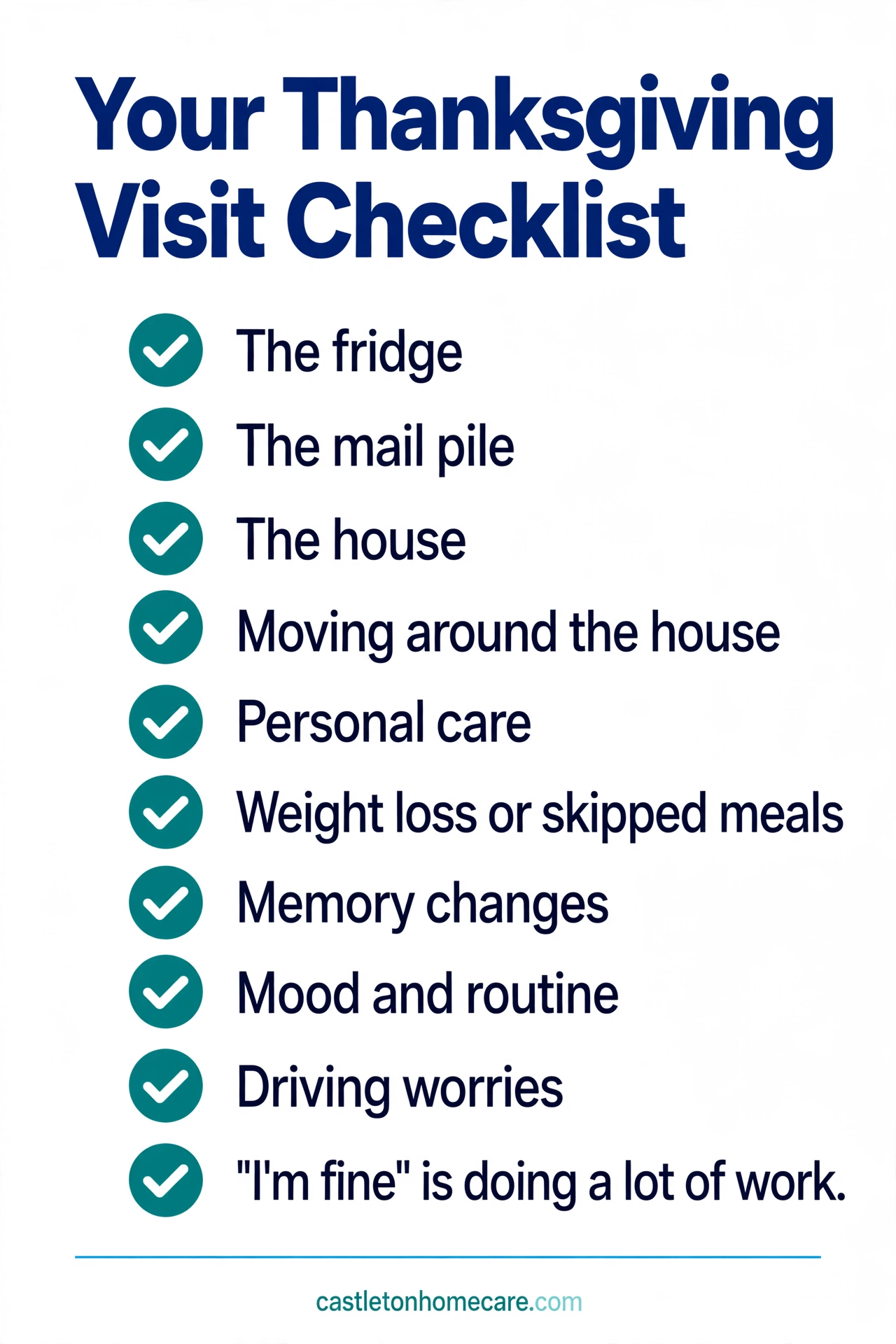
10 Signs to Notice During Your Thanksgiving Visit
1. The Fridge Tells a Story
Open the fridge when you get a chance. Expired food, nearly empty shelves, or a stack of takeout containers can tell you that shopping and cooking have gotten hard. Maybe the drive to the store feels like too much, or standing at the stove is tiring, or meals have quietly shrunk to toast and tea.
What it means: food is often the first daily task to slip, because it takes planning, driving, standing, and cleanup. What to do: notice without lecturing. Offer to cook together while you are there, and ask what meals they actually enjoy making. If cooking has become the hard part, a caregiver who preps meals and shares them is a simple, welcome fix.
2. The Mail Pile
Look at the mail. Unopened envelopes, a stack of bills, late notices, or a magazine subscription that lapsed months ago can mean paperwork has started slipping. So can a checkbook that has not been balanced in a while, or the same bill paid twice.
What it means: keeping up with bills and paperwork takes focus and follow-through, and it is one of the first things to go when energy or memory changes. What to do: offer to sit down and sort the pile together, not to take it over. If the pile is big, a calm afternoon with a cup of coffee can clear most of it, and it gives you a clear picture of whether anything important is overdue.
3. The House Looks Different
You know this house. If the laundry is undone, rooms are closed off, dust has settled where it never used to, or the yard looks less tended than usual, something has changed. This is not about housekeeping standards. It is about a change from how your parent has always kept their home.
What it means: light housekeeping takes more energy than most people realize, and when it slips, it usually means your parent is spending their energy on the essentials and letting the rest go. What to do: notice the change without commenting on every room. A caregiver who handles light housekeeping as part of a regular visit takes this off your parent's plate without making it a big deal.
4. Moving Around the House Has Changed
Watch how your parent moves. Slower steps, a hand on the furniture, avoiding the stairs, or new bruises they brush off can all be worth a closer look. About 1 in 4 adults 65 and older fall each year, according to the Centers for Disease Control and Prevention, and most falls at home happen in familiar rooms, not unfamiliar places.
What it means: mobility changes often creep in quietly, and your parent may have already adjusted by moving less. Less movement is not a solution, it just hides the problem. What to do: notice the routes they take through the house, check that the path to the bathroom is clear and lit at night, and ask how they feel on the stairs. A caregiver who is there for steady, everyday help makes the house safer without making your parent feel watched.
5. Personal Care Is Slipping
Same clothes several days in a row, unwashed hair, skipped shaving or grooming, or a bathroom that looks unused can mean bathing and dressing have gotten difficult. This is a sensitive one, and it is easy to miss if you are only visiting for a day.
What it means: bathing and dressing take balance, strength, and confidence, and when they get hard, people often quietly stop doing them rather than ask for help. What to do: keep this conversation private and gentle. A caregiver who helps with personal care, respectfully and routinely, is often the easiest fix of all, because it restores a daily rhythm your parent already wants back.
6. Weight Loss or Skipped Meals
Looser clothes, a smaller appetite at dinner, or a quick "I already ate" when you know they probably did not can mean nutrition is slipping. Check the pantry too: if it is full of the same few items, or mostly empty, meals may have narrowed to whatever is easiest.
What it means: eating well takes shopping, cooking, and company, and all three can fade at once. Weight loss in an older adult is always worth a closer look, and a doctor visit is a good next step alongside any help at home. What to do: share meals while you are there, notice what actually gets eaten, and ask what they enjoy cooking. A caregiver who prepares meals and eats with your parent often does more for appetite than any lecture about nutrition.
7. Memory Changes
Repeating the same story in one afternoon, missing appointments, confusion about what day it is, pill bottles that look untouched or out of order, or keys and glasses that keep going missing are all worth noting. One forgotten name is normal. A pattern is worth a closer look.
What it means: memory changes can come from many things, including medications, poor sleep, or a health issue that has nothing to do with memory itself, which is why a doctor visit matters. What to do: note patterns, not one-offs, and suggest a check-up as a routine thing, not an alarm. At home, a caregiver who offers medication reminders and keeps the day on a steady, familiar routine makes memory changes much easier to live with.
8. Mood and Routine Have Shifted
A parent who used to love church, cards, the garden, or lunch with friends but has quietly stopped going may be withdrawing. Sleeping much more than usual, or seeming flat and uninterested in things they once enjoyed, is also worth noticing.
What it means: when daily life gets harder, people often shrink their world to what feels manageable, and that shrinking can look like low mood or loneliness. Company and routine are genuinely helpful here, not just nice to have. What to do: ask what they would enjoy doing again, and offer to go with them. A caregiver who provides companionship, someone to talk to, share a meal with, and get out of the house with, can reopen a routine that has gone quiet.
9. Driving Worries
New dents or scrapes on the car, a ticket, a story about getting lost on a familiar route, or a neighbor mentioning something can all be signs that driving has become harder. This is the sign families find hardest to raise, because driving means independence.
What it means: driving takes quick reactions, good vision, and clear judgment, and all three can fade gradually. What to do: ride along on an errand while you are visiting, and talk about alternatives rather than ultimatums. A caregiver who drives to appointments, the store, and lunch with friends keeps your parent's independence intact without the keys being the issue.
10. "I'm Fine" Is Doing a Lot of Work
Sometimes the clearest sign is not any one thing, but the way your parent is coping: they have quietly stopped cooking, stopped going out, stopped inviting people over, and their days have gotten smaller. They are managing, but only by doing less and less.
What it means: your parent is adapting by shrinking their life to fit what they can still do alone. That works for a while, and it is also exactly when a little steady help makes the biggest difference, because it lets them keep doing the things they enjoy instead of giving them up one by one. What to do: look at what your parent has quietly given up, and ask what they miss. That answer tells you more than any checklist can.
How to Bring It Up Without Starting a Fight
Noticing is the easy part. Talking about it is where most families get stuck, so here is what works.
Lead with love, not alarm. "I noticed the fridge was pretty empty, and I worry about you eating well" lands very differently from "You can't take care of yourself anymore." Pick one thing, not all ten. A conversation about one specific, practical thing, meals, or the drive to the store, is a conversation your parent can join. A list of everything you noticed feels like an ambush.
Use "I" statements. "I worry when I can't reach you" is easier to hear than "You never answer the phone." Ask what help they would actually welcome, and listen to the answer. Many parents will say yes to a little help with meals or rides long before they will say yes to "home care," and that yes is a real place to start.
Offer a trial, not a takeover. A steady routine for a few weeks, with the same familiar caregiver, lets your parent experience the help before deciding anything. And if you have siblings, talk with them before the conversation, not after, so your parent hears one calm, united voice instead of a family debate.
If you are also wondering how to start that conversation, our guide How to Talk to Your Aging Parent About Home Care (Without Starting a Fight) walks through it step by step.
What a First Step Looks Like
A first step does not have to be a big one. It starts with a free consultation with us. We will talk through what you noticed during your visit, what your parent's days look like now, and what kind of help you are considering. Then our registered nurse will do an in-home assessment, meet your parent, see the home, and build a care plan with a steady, ongoing schedule built around your parent's real needs.
If you would like to understand pricing first, visit our pricing page, answer three quick questions, and get your pricing range instantly. Call Castleton Home Care at 770-810-5974, or reach us through our contact form. When we get in touch, we'll take the time to personally understand your unique situation and offer solutions that fit.
Frequently Asked Questions
Does noticing a few of these signs mean my parent needs full-time care?
No. Noticing a few signs means it is time for a conversation and an in-home assessment, not a crisis decision. The usual shape is a steady, ongoing routine that covers the parts of the week that are hardest, and the schedule adjusts as things change. The assessment is what turns a list of worries into a real plan.
My parent says they're fine. Should I believe them?
Trust them, and verify gently. Independence matters, and your parent's view of their own life counts. An in-home assessment is a check, not a takeover: the registered nurse meets your parent, sees the home, and builds a plan around what your parent actually wants help with. Many parents who resist the idea at first come to value it within a few weeks, because the days get easier.
Should I bring this up at Thanksgiving dinner?
Not at the table. Thanksgiving dinner is for enjoying each other, not for a care conversation. Find a quiet moment during the visit, a walk, a drive, or a cup of coffee after everyone else has gone to bed, or wait until the weekend after the holiday. The conversation goes better when it is private, calm, and unhurried.
What if my siblings disagree about what Mom or Dad needs?
That is common, and it is usually because everyone is working from different information. One conversation, with everyone in the room or on the phone, helps, and the in-home assessment gives the whole family the same facts to work from. It also helps to agree on one person to hold the thread with the agency, so decisions move faster and cause less friction.
How much does home care cost?
That depends on your parent's situation and schedule, so there is no single number. The fastest way to a real answer is our pricing page: answer three quick questions and get your pricing range instantly, then the free consultation and the RN's in-home assessment turn that range into a written quote for your parent's actual schedule.
Sources
- Centers for Disease Control and Prevention, "Facts About Falls" (cdc.gov) (about 1 in 4 adults 65+ fall each year; falls are the leading cause of injury in that age group)
Disclaimer: The information in this article is provided for general educational and informational purposes only and is not intended as, and should not be taken as, medical, nursing, legal, financial, tax, or insurance advice. You should consult with qualified professionals, including, but not limited to, a doctor, attorney, financial planner, or tax advisor, for guidance specific to your situation. Castleton Home Care does not guarantee the accuracy, completeness, or timeliness of the information contained in this article and assumes no liability for any actions taken based on its contents.